Open 24 hours, every day of the year
A good first aid kit holds the items you need for everyday cuts, burns and sprains, kept together where everyone can find them.
This guide covers
The basics
A first aid kit lets you deal with minor injuries on the spot, and keep someone comfortable until help arrives for anything more serious.
It is not a substitute for medical care. A kit helps you clean a graze, cover a burn or support a sprained wrist, and it gives you gloves and a mouthpiece if you need to help someone in an emergency.
The right contents depend on where the kit lives and who might use it. A family kit, a car kit and a workplace kit overlap, but each has its own needs.
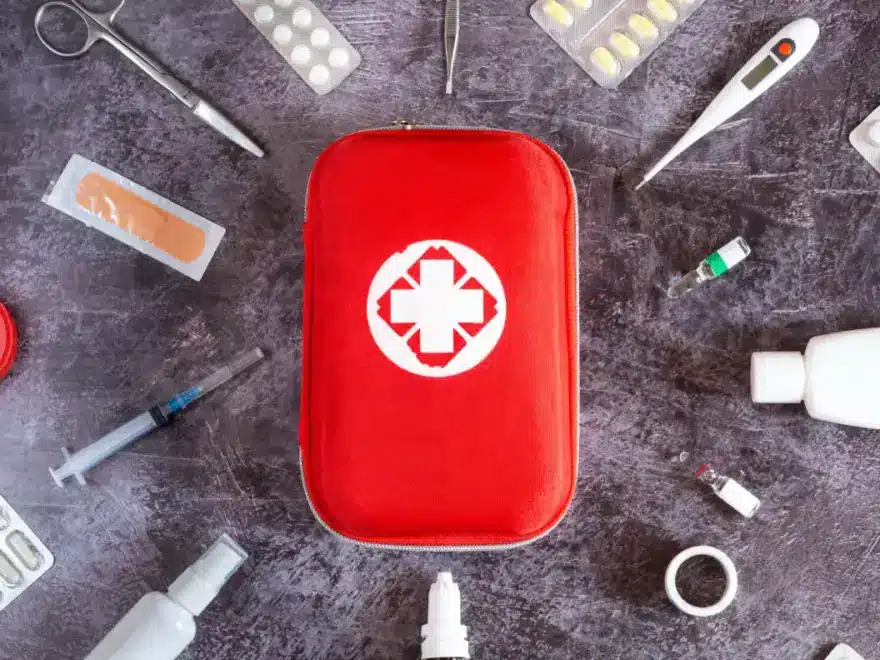
Checklist
These items belong in a first aid kit for most everyday injuries. Tick them off when you build or check a kit.
| Item | Used for | Home | Car |
|---|---|---|---|
| Disposable gloves | Protecting you and the injured person | Yes | Yes |
| Wound cleaner or antiseptic | Cleaning cuts and grazes | Yes | Yes |
| Adhesive plasters, assorted sizes | Small cuts and blisters | Yes | Yes |
| Sterile gauze and dressings | Covering larger wounds and controlling bleeding | Yes | Yes |
| Roller and triangular bandages | Holding dressings, supporting sprains, making a sling | Yes | Yes |
| Adhesive tape | Securing dressings | Yes | Yes |
| Scissors and forceps | Cutting tape and removing splinters | Yes | Yes |
| CPR mouthpiece | Giving rescue breaths safely | Yes | Yes |
| Burn dressing or gel | Cooling and covering minor burns | Yes | Optional |
| Foil blanket, torch and emergency numbers | Keeping warm and being seen at a roadside | Optional | Yes |
Write the numbers you need on a card inside the lid: 086 1725 633 for a Ralmed ambulance, 10177 for the public service and 112 from a mobile.
At work
Yes. In South Africa, workplaces with more than five employees must keep a first aid box that meets General Safety Regulation 3, with a set list of minimum contents.
The workplace list is longer and more specific than a family first aid kit, with fixed quantities of bandages, dressings and gloves. Workplaces with more than ten employees also need certified first aiders.
Read our guides to the Regulation 3 first aid kit and the Regulation 7 first aid kit for the details. The official regulations are published by the Department of Employment and Labour.

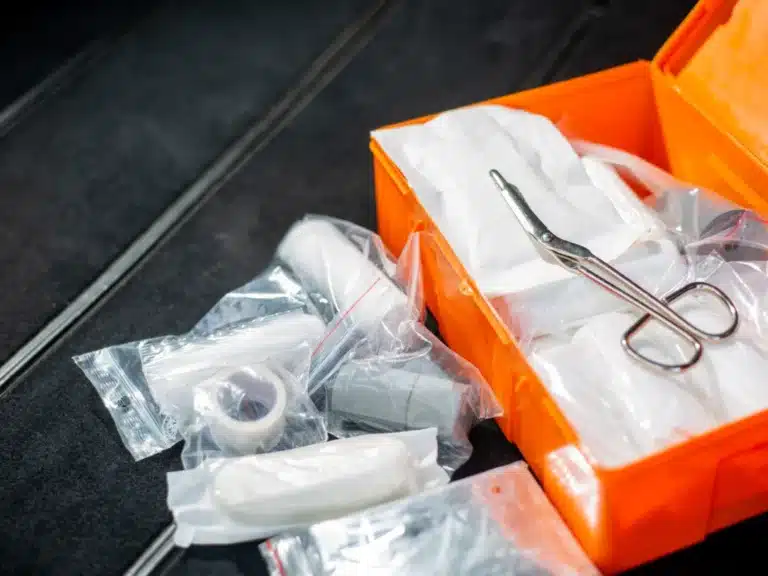
Care of the kit
01
Somewhere cool, dry and easy to reach, and known to everyone in the house or office.
02
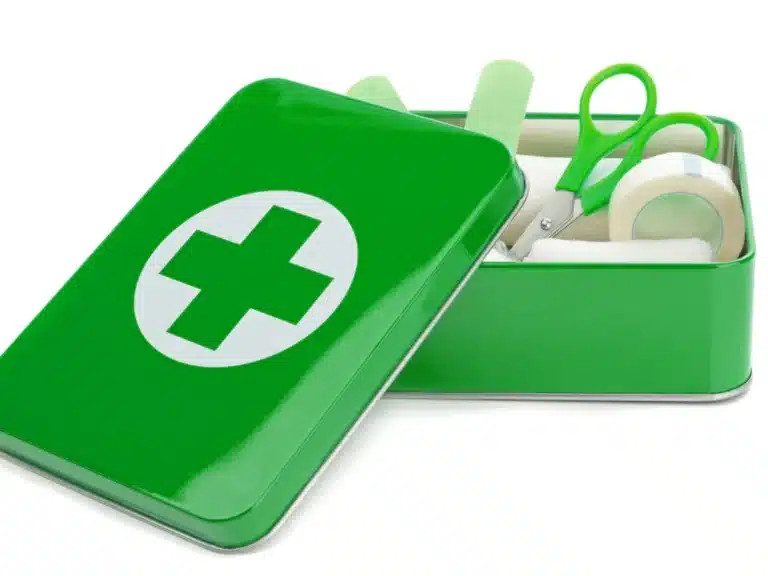
A white cross on a green background is the common sign for first aid.
03
Replace anything used, damaged or past its expiry date.
04
A first aid course turns a box of supplies into real help.
For an emergency, the kit is only step one. Save our number: 086 1725 633.
Questions
It should hold disposable gloves, wound cleaner, plasters, sterile dressings, bandages, tape, scissors, forceps and a CPR mouthpiece, plus Ralmed's number, 086 1725 633, on a card inside. Add burn dressings for a home kit and a foil blanket for the car. Check the contents every few months and after each use.
Many families keep a few everyday medicines, such as pain relief, but label them and check the dates. In a workplace, the first aid box should only hold the listed equipment or similar items, so personal medication belongs elsewhere. Ask a pharmacist if you are unsure what to store.
Check it at least every few months at home, monthly at work, and after every time it is used. Replace anything missing, damaged or out of date, and make sure gloves and antiseptic have not perished in the heat. A simple checklist taped inside the lid makes this easier.
It is a sensible idea, especially for long trips. Add a foil blanket, a torch and a reflective triangle, and keep the kit where you can reach it without unpacking the boot. Heat inside a parked car can spoil some items, so check it more often.
A first aid kit helps, but knowing how to use it matters more. A first aid course teaches you to control bleeding, treat burns and give CPR, so the supplies in the box become useful in a real emergency. Ralmed runs accredited courses anywhere in South Africa.
Call for help first. For severe bleeding, a head injury, difficulty breathing or someone who will not wake up, call an ambulance on 086 1725 633 or 10177, then use the kit to support the person until the crew arrives.
Keep it in a cool, dry place that adults can reach easily but small children cannot, such as a high kitchen cupboard. Everyone in the house should know where it is. Avoid bathrooms, where steam can damage dressings, and keep a second, smaller kit in the car.
A home kit is chosen by the family and often includes everyday medicines. A workplace kit must meet General Safety Regulation 3 wherever more than five employees work, holding the listed items and no personal medication. Our Regulation 3 and Regulation 7 first aid kit guides explain the workplace lists in detail.
Yes. A CPR mouthpiece or face shield lets you give rescue breaths with a barrier between you and the patient. It is small and fits in any kit. Learn how to use it on a first aid course, because correct hand position and steady compressions matter as much as the equipment.
Related
See our first aid courses, the OHS Act guide and all our OHS and first aid resources.
Stock the first aid kit, learn the basics and save the number for help. Ralmed trains first aiders and answers emergency calls day and night. Keep your first aid kit ready and our number in your phone: 086 1725 633.
