Open 24 hours, every day of the year
Intermediate first aid is the middle of the three South African levels. It takes a Basic (formerly First Aid Level 1) first aider and gives them more scope — more depth on medical emergencies, more on moving an injured person safely, and more confidence when the casualty does not get better on their own. Accredited through HWSETA and the QCTO.
At a glance
The course
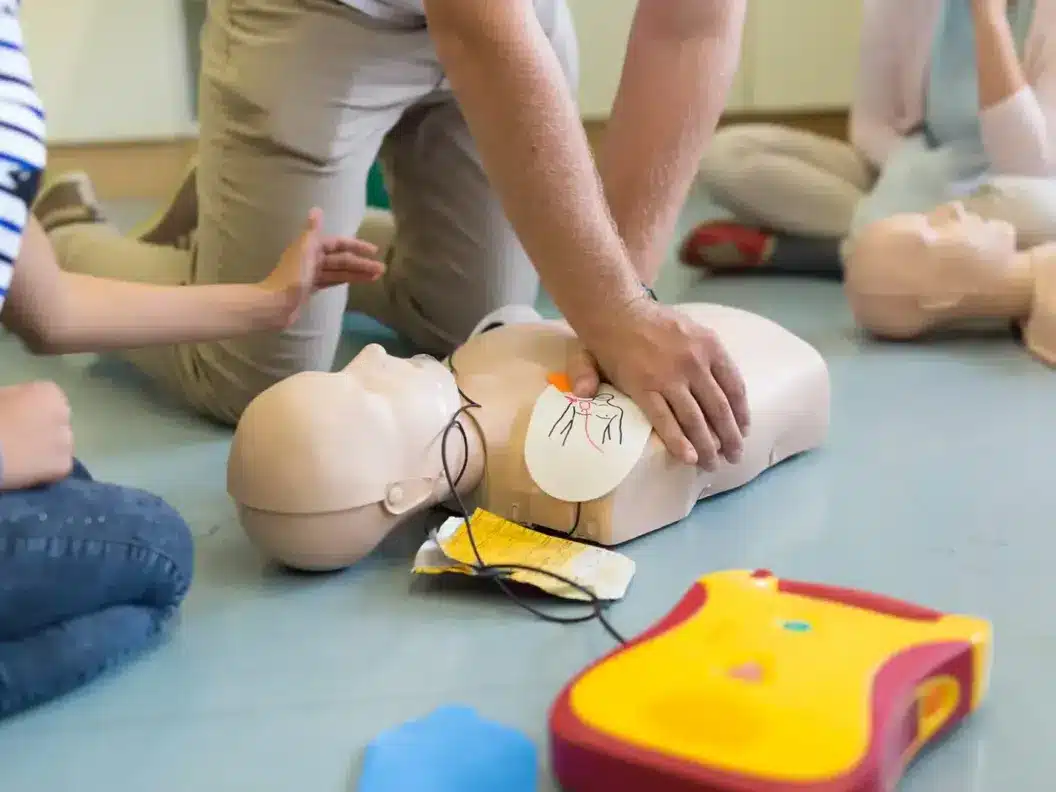
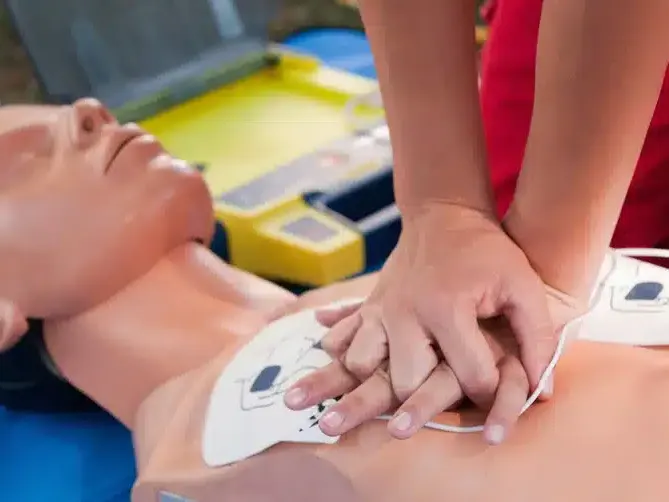
Intermediate first aid is for the first aider who has done Basic (formerly First Aid Level 1) and found the ceiling. It revisits the life-support core — CPR, defibrillator, bleeding, airway — then keeps going into the situations Basic first aid only introduces.
Delegates work through the medical emergencies in more detail: chest pain and stroke, diabetic emergencies, seizures, asthma and severe allergic reactions, poisoning, and heat and cold injuries. The emphasis moves from recognising a problem to managing it over time.
The other addition is the casualty themselves — how to examine someone properly head to toe, how to move an injured person without making the injury worse, and how to keep a record that is useful to the ambulance crew who take over.
Who it is for
Intermediate first aid suits the first aider whose workplace carries more risk than an office, and the person who wants to be genuinely useful rather than merely certified.
First aiders who have held Basic for a while and want the next step, often at requalification time rather than starting Basic first aid again.
Workshops, warehouses, factories and sites where the injuries are more than cuts and the response takes longer.
People responsible for others away from immediate help, where a single first aider may be on their own for a while.
Sites working their first aiders up to Advanced over time, using Intermediate as the stepping stone rather than a leap.
The levels
The three levels build on each other. Intermediate first aid sits in the middle: more than the basics, short of leading a serious scene.
| Level | Who it suits | What it adds |
|---|---|---|
| Basic First Aid | Every workplace first aider, and anyone new to first aid | Scene management, CPR and defibrillator use, bleeding, burns, fractures, shock and the common medical emergencies |
| Intermediate First Aid | First aiders in higher-risk workplaces, and Basic holders going further | The Basic first aid skills in more depth, with more on medical emergencies, heat and cold injuries and moving a casualty safely |
| Advanced First Aid | Senior first aiders, safety officers, and remote or high-risk sites | Advanced assessment, airway and oxygen skills, serious trauma, triage of multiple casualties and leading the response |
How it works
01
Give us the number of delegates and whether they already hold Basic first aid (formerly First Aid Level 1), so we pitch the course at the right starting point.
02
We run the course at your premises anywhere in South Africa, or in our training room at Kelvin View in Sandton.
03
Delegates spend most of the course working through casualties rather than slides, with scenarios drawn from their own workplace.
04
Every delegate is assessed practically. Those who meet the standard receive an accredited certificate.
Moving your first aiders up to Intermediate (formerly First Aid Level 2)? Tell us how many, and where.
Accredited. Intermediate first aid is accredited through HWSETA and the QCTO, so the certificate holds up when an inspector asks.
Taught by working paramedics. Ralmed runs an ambulance service, so the medical emergencies in the course are ones the trainer has actually attended.
At your premises. We bring the course to your site anywhere in South Africa, which costs you far less time than sending people away.
A real step up. Intermediate first aid should not feel like Basic first aid (formerly First Aid Level 1) again. We build the course on what the group already holds.
Cost
Intermediate first aid is quoted per group rather than off a fixed list. The cost moves with the things below, and we put the quote in writing before anything is booked.
These are the things that set the price:
For a quote, tell us how many people need Intermediate first aid, what they already hold and where they are. Call 0861 725 633 or send a WhatsApp.
Your options
At requalification time employers often ask whether to repeat Basic first aid or move the team up. This is the trade-off.
| Option | What it does | Suits | Things to weigh up |
|---|---|---|---|
| Move up to Intermediate first aid | Revisits the core, then adds medical emergencies and casualty handling | First aiders who have used Basic and want more scope | Longer than a Basic first aid requalification |
| Repeat Basic first aid | Requalifies the same scope for another cycle | Low-risk workplaces where Basic first aid is genuinely enough | The capable first aiders learn little they do not already know |
| Go straight to Advanced first aid (formerly First Aid Level 3) | The advanced level, built for leading a serious scene | Senior first aiders on high-risk or remote sites | A long step without Intermediate first aid behind it |
Get started
Send the number of delegates, what they already hold and where they are, and we will come back with a date and a written quote.
Training room
89 Impala Road, Kelvin View, Sandton
Or we come to your premises.
Anywhere in South Africa, at the client's own premises. Most Intermediate first aid groups are trained on site, in a room the employer already has.
See all our accredited medical training, or look at Basic (formerly First Aid Level 1) and Advanced first aid (formerly First Aid Level 3).
Questions
Basic first aid teaches someone with no background to manage a scene, give CPR, use a defibrillator and treat everyday injuries. Intermediate first aid assumes those skills and adds depth — more on medical emergencies such as chest pain, stroke, diabetic emergencies and severe allergic reactions, plus heat and cold injuries, full casualty examination and how to move an injured person safely.
Normally yes. Intermediate first aid builds on Basic first aid rather than repeating it, so delegates get far more out of it with Basic first aid behind them. Tell us what your team holds and we will confirm.
Workshops, warehouses, factories, schools and clubs — anywhere the risks are more than an office carries, or where a first aider may be on their own for a while before help arrives.
Under the General Safety Regulations of the Occupational Health and Safety Act, a workplace with more than ten employees must have at least one qualified first aider for every fifty employees, along with a stocked first aid box. The Act sets the number; your risk assessment should set the level.
A workplace first aid certificate is generally valid for three years. Diarise the requalification before it lapses, because an expired certificate leaves the appointment on your notice board without valid cover.
Yes, and most Intermediate first aid groups are trained that way. We bring the mannequins and the training equipment to your site; you provide a room and the people.
Yes. Delegates are assessed doing the skills — CPR, bandaging, casualty examination and a scenario — not by writing a test alone.
Yes. Ralmed's first aid training is accredited through the Health and Welfare SETA and the QCTO, and delegates who meet the standard receive an accredited certificate.
If the first aiders have used Basic in anger and want more scope, Intermediate first aid is the better use of the same day off the floor. If the workplace is genuinely low-risk and Basic first aid covers it, requalifying at Basic first aid is fine.
Yes. CPR and defibrillator use stay central at every level, and they are practised on mannequins on every Intermediate course.
Related training
Intermediate first aiders are often the same team that handles fire fighting and risk assessment. When they are ready for more, Advanced first aid (formerly First Aid Level 3) is the next step.
Tell us how many people need Intermediate first aid, what they already hold and where they are, and we will send a date and a written quote.
